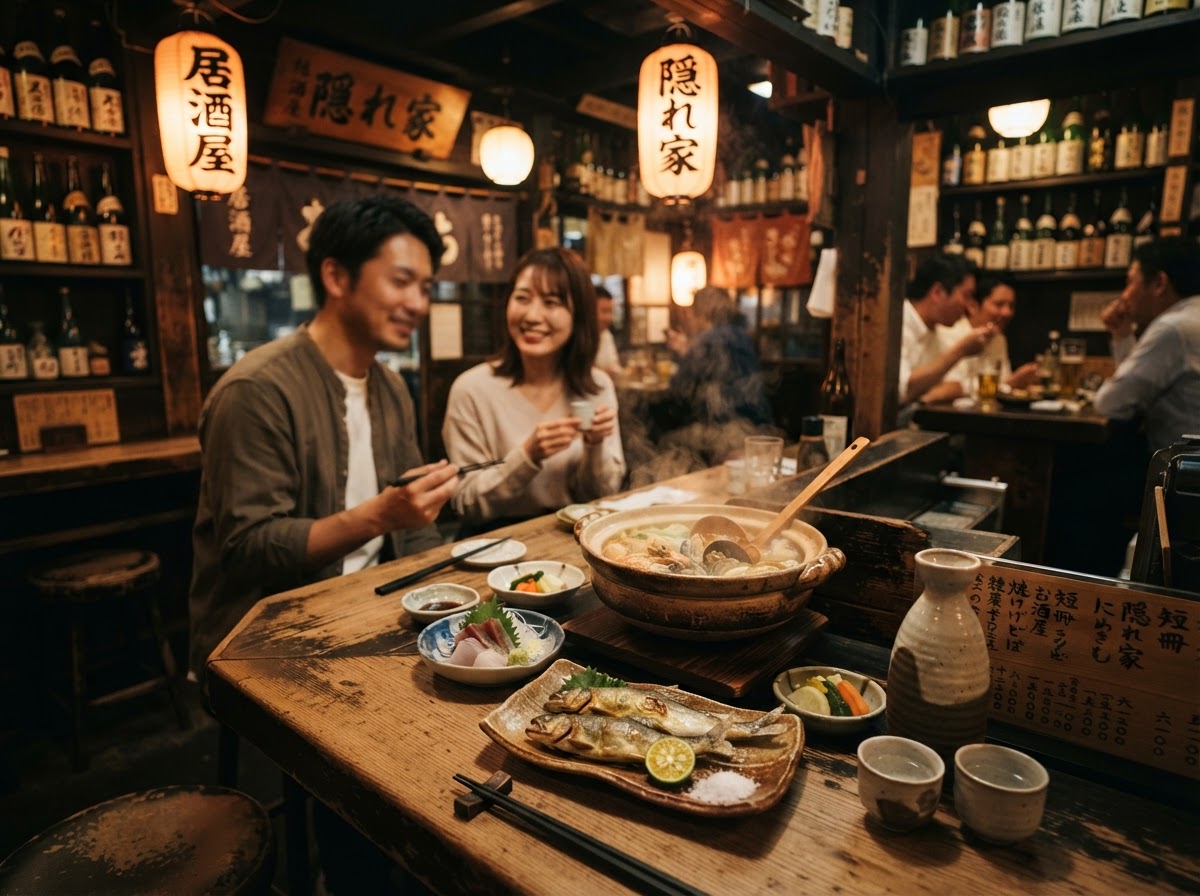
An izakaya is governed by an unwritten contract: you order a drink, you order a small plate, you order another drink, you order another plate. There is no main course. The evening unfolds in increments, and the counter — always the counter, never the booth if you can help it — is where you want to be.
In Hokkaido the izakaya is a seafood story. The catch comes off the boats at Hakodate and Kushiro, and by the time it reaches the counter it is hours, not days, old. The river fish sashimi is laid out with a single wasabi root and a brush. The hot pot — nabe — is whatever the owner decided that morning.
Tokyo izakayas are tighter, louder, older. The best are in basements and behind sliding screens in Shinjuku's Omoide Yokocho and under Asakusa's elevated tracks. The menus are sometimes handwritten, sometimes unwritten. You point. The owner nods. The cost is lower than you expect.
The trick to a good izakaya night is the same as the trick to a good trip: arrive early, stay long, and let the counter guide you. The owner will notice what you liked. The second round will be better than the first. By the fourth, you are no longer a tourist — you are a regular who has not left yet.
Concierge Selection
Hidden Local Spots
Quietly curated places our advisor sends clients to — no sign, no line, no tourist menu.
Kushiro River Fish Izakaya
An eight-seat counter in Kushiro's fishery district where the owner lands his own river salmon each morning. Open from 17:30. No English menu — point and trust. The grilled fish jaw with salt is the order that brings regulars back. Pair with a local Daisetsizan sake, room temperature.
Omoide Yokocho · Shinjuku
The narrow lantern-lit alley behind Shinjuku station. Dozens of stalls, each seating six to eight. Walk the length first — the best counter is the one where the owner waves you in rather than the one with a line. Order the yakitori thigh and the chicken-skin crisp. Cash only. Close to midnight.
Asakusa Elevated Counter
Beneath the JR tracks near Asakusa, a row of izakayas that the tour groups never find. The nabe hot pot in winter is the reason to come — the owner builds it in front of you at the counter and serves it in stages. Ask for the 'nabe course' by name; it is not on the printed menu.

 Translate