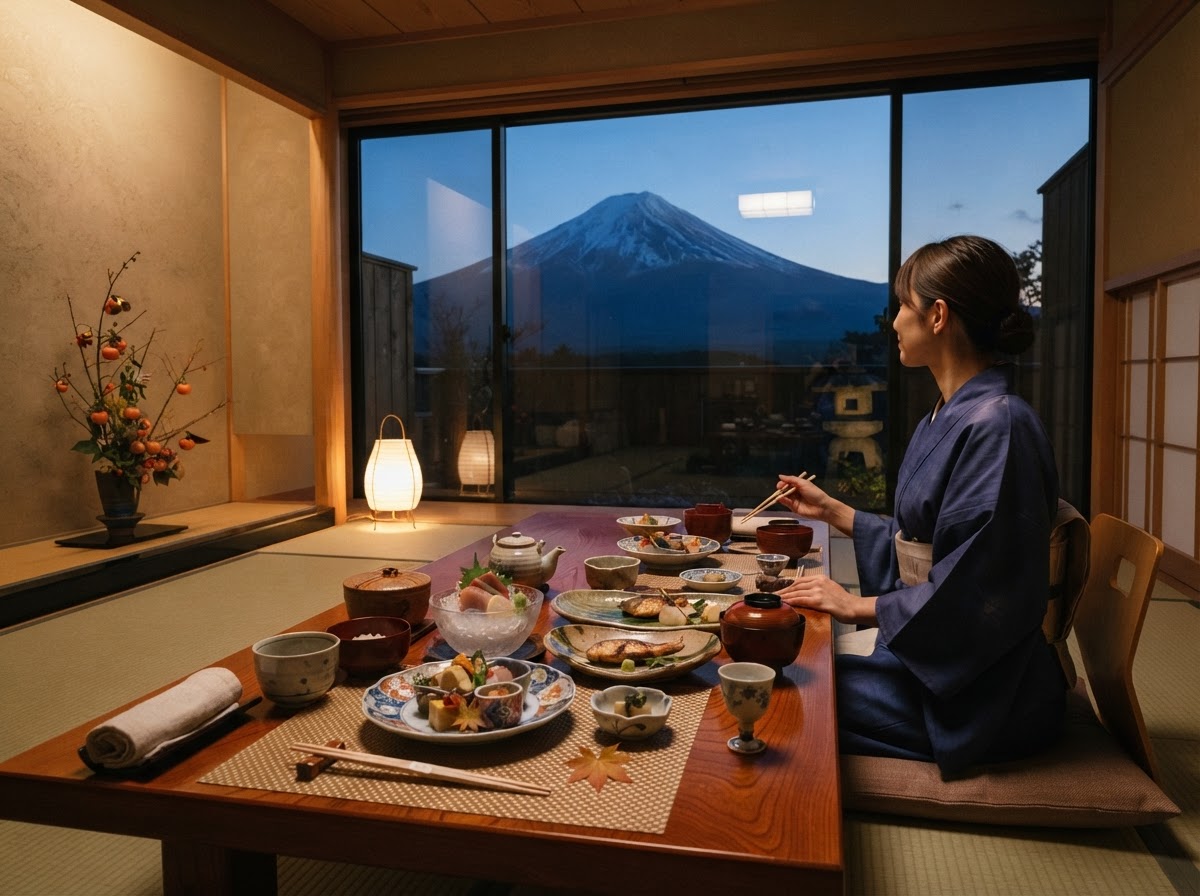
Start in Hakone, where the earth is still warm from the same tectonic exhale that shaped Fuji. The onsen towns here — Gora, Tenzan, Kowakien — pour mineral water that tastes faintly of iron and smells like rain on hot stone. The older ryokans still hand you a yukata at the door and expect you to wear it for the duration of your stay.
What transforms the meal from dinner into kaiseki is the rhythm: the opening sake, the seasonal center, the simmered, the grilled, the rice, the sweet. Each is a small pause. In Hakone the seasonal center is often Lake Ashi's smelt or a mountain vegetable. By the time you reach Kyoto it has become a meditation on a single leaf of maple.
Kyoto after dark is a different city. The geisha districts — Gion, Pontocho, Miyagawa — go amber with lantern light, and the private kaiseki houses behind unmarked wooden doors serve menus that change not weekly but nightly. The chef knows what the morning market held; you do not need to. You sit, you receive, and you learn what was fresh that day.
The throughline between the two places is the Japanese idea of shun — the exact moment a food is at its peak. Not before, not after. The houtou noodle is shun in autumn. The Kyoto matsutake is shun for two weeks in October. To travel for kaiseki is to travel in time as much as in place.
Concierge Selection
Hidden Local Spots
Quietly curated places our advisor sends clients to — no sign, no line, no tourist menu.
Gora Kadan · Private Kaiseki
A former imperial family retreat turned ryokan in Hakone's Gora valley. The kaiseki here is quiet, precise, and seasonal to the day. The private outdoor onsen suites face a moss garden. Reserve the 'Fuji view annex' suite — there are only three, and the concierge holds the best for guests who ask by name.
Kikunoi Honten · Kyoto
A Kyoto institution where the meal is choreographed like a tea ceremony. The autumn menu centers on matsutake, grilled over binchotan in front of you. Counter seats only — six of them — and they open bookings on the first of each month for the following month. Book through your hotel; direct calls rarely connect.
Izuju Soba · Gion Backstreets
A Gion soba house open past midnight, tucked down a lane behind Yasaka Shrine. The soba is buckwheat-cut by hand and served cold on lacquer. After the theater crowd filters out, it becomes a locals' spot — sit at the counter, order the seiro and a warm sake, and let the night finish slowly.